
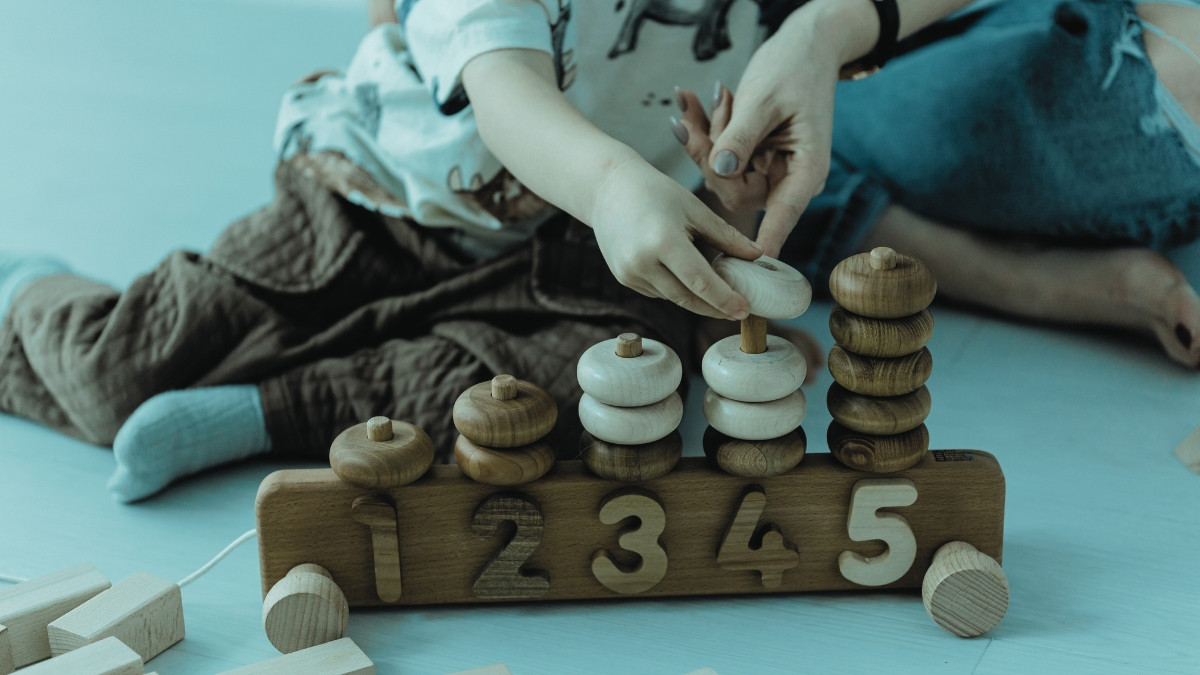
Encouraging Communication Through Play
Play is a powerful gateway to communication for children with ASC. It turns interactions into joyful learning. Supporting Children with Autism Spectrum Condition gives a whole chapter to communication strategies, and play runs through many of them.
Here’s how to use play to build expression and connection.
Why play works
Communication differences in ASC can include delayed speech or difficulty reading social cues. Play takes the pressure off, so expression can happen more naturally. It also works well alongside augmentative and alternative communication (AAC). Chapter 3 explains:
“For non-verbal children or those with limited speech, augmentative and alternative communication (AAC) methods, such as Picture Exchange Communication Systems (PECS) or speech-generating devices, can provide effective tools for expression.”
Five ways to build communication through play
1. Choose simple games. Use picture cards or gestures to make up stories together. This builds vocabulary without overwhelming your child.
2. Encourage gestures. Pointing, nodding and shaking the head all count. From Chapter 5:
“Encouraging children to use gestures, such as pointing, nodding, or shaking their heads, can be an effective way to build non-verbal communication skills.”
3. Try role-play. Act out everyday situations to practise social communication. Keep sessions short and positive. As Chapter 7 says:
“Role-playing common scenarios, such as asking to join a game or resolving a disagreement, provides a safe environment for practicing these skills.”
4. Bring in technology. AAC apps can add a fun element to play. The Resources appendix lists several, including:
“Proloquo2Go (iOS) – A highly customizable speech-generating app with picture-based communication.”
5. Celebrate every effort. Praise each attempt, so your child learns that communicating is rewarding. Chapter 5 puts it simply:
“Every step forward in communication, no matter how small, is worth celebrating.”
Ideas for home and beyond
At home, turn bath time into a gesture game. In therapy, virtual reality tools can offer safe practice of social situations; Chapter 5 covers these emerging technologies. Parents and educators can keep approaches consistent by sharing what works, as Chapter 10 discusses.
For more on AAC and play, see Supporting Children with Autism Spectrum Condition.
What games help your child communicate? Share your ideas with us on social media.
Post 4: Spotting and Nurturing Talents
Date: 30 December 2025 · Category: Autism (ASC) · Slug: spotting-nurturing-talents SEO title: Spotting and Nurturing Talents in Children with Autism Meta description: How to recognise and develop the strengths of children with ASC, from first observations to future career paths. Featured image idea: a child’s hands building with blocks, or a table of art supplies.
Publish this once. The old site had two copies (30 December 2025 and 13 February 2025); delete the duplicate and redirect its old address to this post.
Children with ASC often have remarkable talents, or “superpowers”, that can lead to real success when nurtured. In Supporting Children with Autism Spectrum Condition, Chapter 4 reframes autism as a source of strengths.
This post looks at how to spot those talents and help them grow.
Talents as superpowers
Strengths like detailed thinking and pattern recognition come naturally to many autistic children. Focusing on what a child does well, rather than on deficits, builds their confidence. Chapter 4 sets out its aim:
“This chapter explores the twelve autism superpowers, real-world examples, and how to recognize and nurture these abilities in children with ASC.”
Five steps to spot and nurture talents
1. Watch for passions. Notice what captivates your child, perhaps patterns, building or music.
2. Provide the tools. Offer resources that match their interests, such as art supplies for a visual thinker. Chapter 4 describes one superpower like this:
“The Detail Detective: Some autistic individuals possess an extraordinary ability to notice patterns, inconsistencies, and tiny details that others overlook.”
3. Explore together. Join in with their activities, and celebrate small wins along the way.
4. Look ahead. Connect talents to future paths. The book’s Superpower Career & Interest Pathway Chart:
“…maps the twelve autism superpowers… to potential hobbies, academic subjects, and careers (e.g., Detail Detective to data analysis).”
5. Work with school. Share what you’ve noticed with your child’s teachers, so their strengths can be used in the classroom too (see Chapter 13).
As Chapter 4 concludes:
“By recognizing and nurturing autistic strengths, we can help individuals with ASC build confidence, develop meaningful careers, and contribute in unique ways to society.”
In everyday life
A child with the Sensory Scout superpower might shine in music. Give them access to instruments and watch them thrive. The Superpowers Reflection Journal in the Resources appendix is a simple way to track their growth.
To learn about all twelve superpowers, read Exploring the Twelve Autism Superpowers, or get the full guide in Supporting Children with Autism Spectrum Condition.
How have you nurtured a child’s talent? Share your story with us on social media.